
You’ll find the Miyoo Mini Plus+ is a compact, capable pocket retro handheld that nails 8‑ and 16‑bit play and handles many 32‑bit ports smoothly, but it trades some battery life (around six hours) and struggles with certain late‑gen 3D titles. Controls are precise and the screen is sharp, though the small shell can bother larger hands. It’s great value if you want open‑source flexibility and portability — keep going to see where it really shines and where it doesn’t.
Key Takeaways
- Excellent emulation for 8/16-bit and many 32-bit games keeps it competitive for classic libraries.
- Compact, well-balanced design with crisp 3.5″ IPS screen makes it the best pocket option for portability.
- Battery lasts about six hours under typical play, limiting long travel sessions without recharge.
- Open-source flexibility and strong community support offer customization but lack polished commercial UX.
- Performance drops on late 5th/6th-gen and some early 3D titles mean compromises versus higher-end handhelds.
Verdict : Is the Miyoo Mini Plus+ the Best Pocket Retro Handheld?
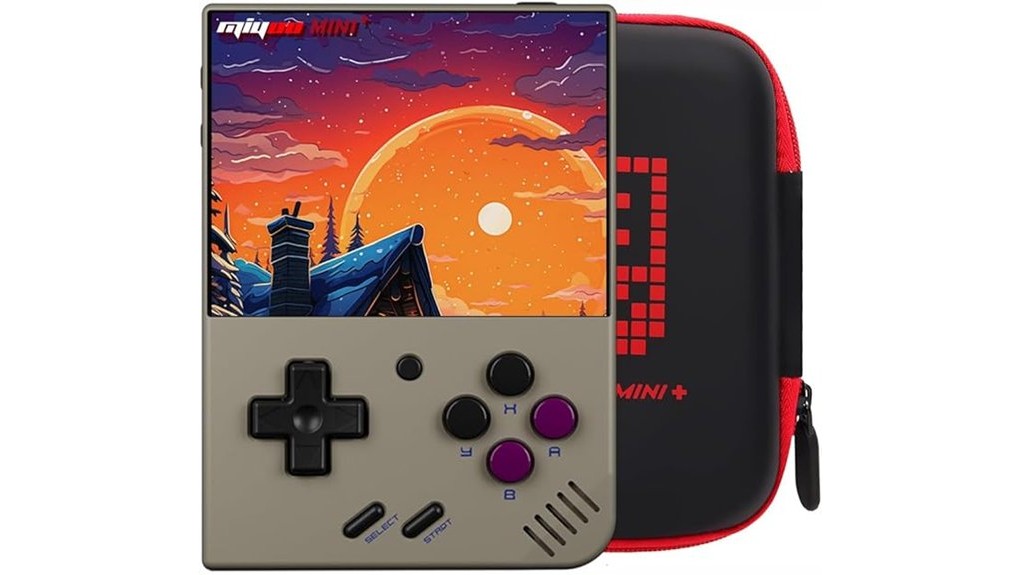
Who’s the Miyoo Mini Plus+ best for?
You want a compact, powerful retro handheld that frees you from bulky consoles and subscription gates. You’ll appreciate the 3.5-inch IPS display, ARM Cortex-A7 snappiness, and Linux-optimized stability that handles 3,000+ classics without frame drops.
The 64GB storage, RTC, WiFi, and upgraded online multiplayer expand freedom to play anywhere, while save/load and favorites simplify control.
Battery life and build make it pocketable and reliable, though six hours limits marathon sessions.
It’s not flawless, but for liberated gamers craving portability, versatility, and open-source flexibility, it’s a leading choice.
Best For: Travelers and retro gamers who want a compact, open-source pocket handheld that runs 3,000+ classic titles smoothly with WiFi/RTC features and easy save/load functionality.
Pros:
- Compact 3.5-inch IPS display with stereo sound and Linux-optimized performance for stable, low-latency gameplay.
- Built-in ARM Cortex-A7, 64 GB storage, WiFi, RTC, and upgraded online multiplayer for versatile, portable play.
- Includes accessories (screen protector, USB-C cable, TF-card reader) and a solid 3000 mAh battery for up to ~6 hours of use.
Cons:
- Only about six hours of battery life, which can limit long play sessions.
- Not a perfect, polished commercial ecosystem—relies on open-source software and community support for some features.
- Smaller form factor may be uncomfortable for extended use or for players who prefer larger controls.
Emulation: Systems That Run Great, Struggle, and Gotchas
When you dig into emulation on the Miyoo Mini Plus+, you’ll find a predictable split: 8-bit and most 16-bit systems run near-perfectly, while more demanding 3D or late-5th/6th‑gen titles can stutter or need compromises. You’ll appreciate clean emulation performance for NES, SNES, Genesis, and portable classics; they’re precise and liberating for on-the-go play. However, you’ll face compatibility issues with Dreamcast, PSP, and many PlayStation 2-era games — frame drops, audio hitches, and shader limits force you to pick your battles.
| System Category | Typical Result |
|---|---|
| 8‑bit/16‑bit | Excellent |
| Early 3D | Variable |
| Late 5th/6th‑gen | Problematic |
| Handheld 32‑bit | Often good |
| Experimental cores | Mixed |
Controls, Fit, and Comfort for Long Play
Good emulation only matters if the hardware lets you play comfortably for hours, so let’s look at how the Miyoo Mini Plus+ handles controls, grip, and fatigue.
You’ll appreciate the crisp D-pad and well-spaced action buttons; the button layout favors precision over flash, making tight platforming and fighting games feel reliable.
Shoulder buttons are small but responsive — they’ll suit most sessions unless you favor heavy analog input.
The molded rear provides a confident grip, though your hand size changes the experience: smaller hands find it ideal, larger hands may notice fingertip strain after long runs.
Weight distribution is balanced so wrist torque stays low.
Screen, Battery, Charging, and Daily Use
Display quality matters more on a pocket handheld than on a TV, and the Miyoo Mini Plus+ gives you a sharp 3.5-inch IPS panel that punches above its size with good viewing angles and solid color accuracy for retro titles.
You’ll appreciate crisp pixels and a matte-like finish that reduces glare outdoors, though peak brightness won’t rival flagship phones.
Battery life is balanced: expect 6–8 hours of moderate play depending on emulation load. Charging uses USB-C with sensible throttling to protect the cell; you’ll recharge quickly from modern chargers and won’t have to baby the battery.
In daily use the system feels liberated — responsive wake, predictable thermal behavior, and power efficiency that lets you play longer without hunting outlets.
Value and Alternatives: Who Should Buy It and Better Options
So who should pick the Miyoo Mini Plus+? You should if you want a compact, powerful retro handheld that balances cost and capability — the price comparison favors it against many premium niche rivals.
You’ll appreciate its tactile controls, vibrant screen, and open firmware if you value freedom and tweakability.
- Crave liberation from big-platform ecosystems and want control.
- Strong emulation without paying flagship premiums.
- Pocket device that doesn’t compromise playability.
- Willing to tinker for performance and customization.
- Prefer community-driven support over corporate lock-in.
If you want plug-and-play polish or superior battery life, consider alternative devices with bigger batteries or official support; weigh alternative devices by features, ecosystem, and long-term value.
Frequently Asked Questions
Is the Firmware Moddable or Open-Source?
Yes — it’s moddable but not fully open-source. For example, a community port added features via custom firmware options; you’ll need active community support, careful flashing, and readiness to troubleshoot risks for real freedom.
Can It Stream or Connect to Wi‑Fi Multiplayer?
No — it doesn’t support Wi Fi gaming or native multiplayer features; you’ll rely on local emulation and hacks, critiquing locked networking while seeking liberated, community-driven mods to enable any peer-to-peer play.
Does It Support Save States Across Firmware Updates?
Yes — you can usually keep save state functionality across minor firmware updates, but you’ll want backups: firmware stability varies, so export states manually, track changelogs, and restore cautiously to protect liberated progress and avoid corruption.
Are Replacement Buttons or Shells Officially Sold?
No — they don’t officially sell replacement parts or shell customization directly; you’ll rely on third-party vendors and mod communities for replacement parts, customized shells, and liberation-focused upgrades that respect your handheld’s freedom.
Is There Parental Control or Content Filtering Support?
No — it doesn’t offer built-in parental settings or content restrictions, so you’ll need external controls. You should critically manage access via routers, OS-level filters, or supervised use to protect freedom while limiting unwanted content.
Conclusion
You’ll love the Miyoo Mini Plus+ for its pocketable power, faithful emulation, and tactile controls—but you’ll bristle at its screen quirks, battery limits, and occasional compatibility headaches. You’ll play classics with near-perfect accuracy, you’ll carry it everywhere with confident comfort, and you’ll accept its flaws when the price and portability win out. If you want obsessive emulation quality in a tiny, affordable package, this still might be your best bet.